
Recent News
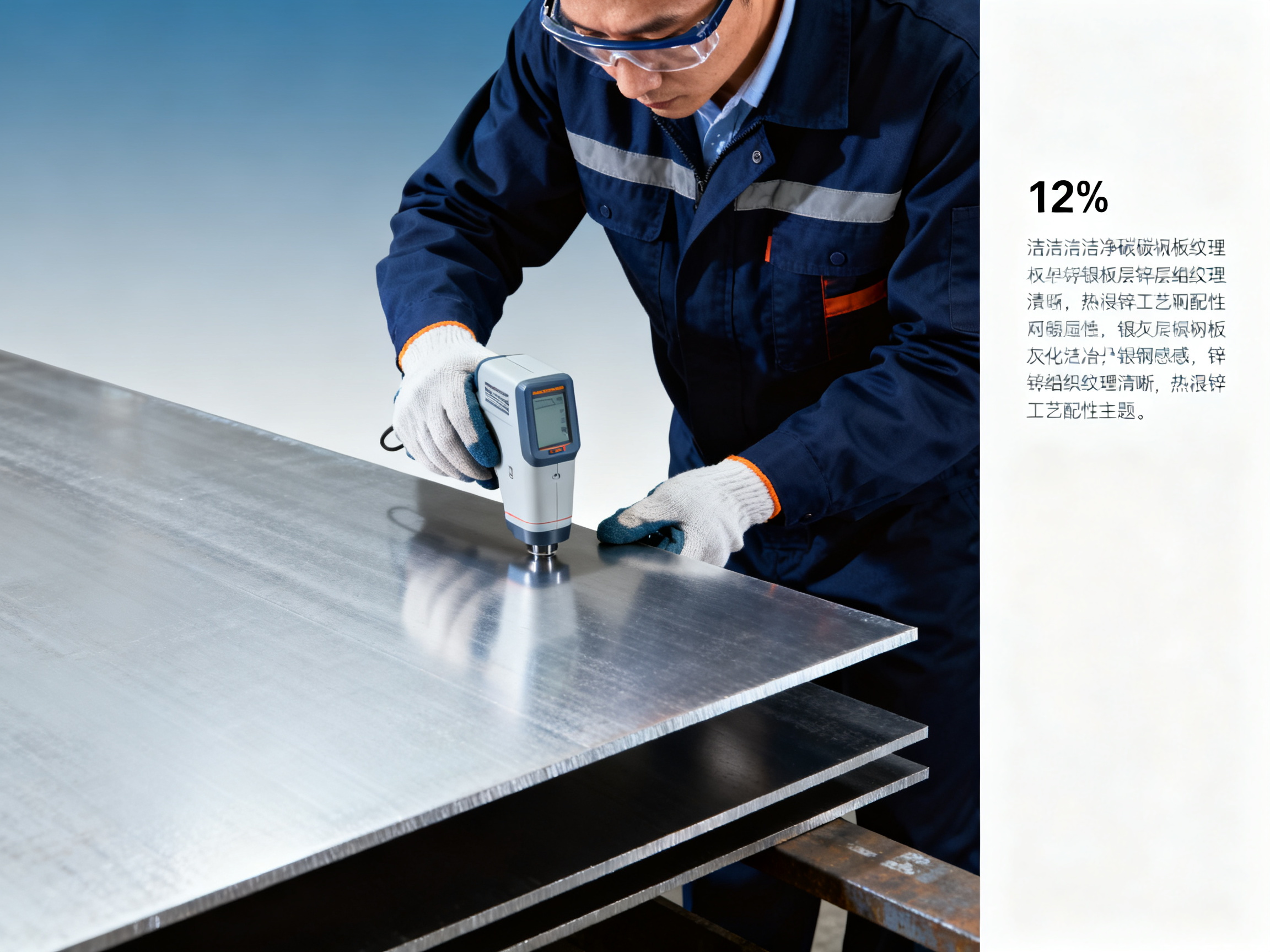
Yes, carbon steel plate can be galvanized—specifically via hot-dip galvanizing—but suitability depends on chemical composition, surface condition, and metallurgical structure. Not all carbon steel grades respond equally: those with low silicon and phosphorus content, and moderate manganese levels, typically achieve uniform, adherent zinc coatings per ASTM A123 and ISO 1461. In industrial procurement and infrastructure projects scheduled for deployment in 2026, premature coating failure or bare-spot formation often traces back to unassessed grade compatibility rather than application technique. Therefore, evaluating base material chemistry—not just thickness or finish—is the primary technical gate before specifying galvanizing. This assessment directly impacts lifecycle cost, maintenance frequency, and corrosion performance in aggressive environments such as coastal or industrial zones.
Key Technical Questions and Evidence-Based Answers
What defines galvanizing suitability for carbon steel plate?
Suitability is determined by the Steel Reactivity Index (SRI), derived from silicon and phosphorus content. Per ASTM A385, steels with silicon<0.04% or 0.15–0.22% and phosphorus <0.02% generally produce consistent matte-gray coatings. Steels outside this range risk excessive alloy layer growth or brittle spalling. Surface mill scale must be fully removed prior to pickling; residual oxide inhibits zinc-iron diffusion. Real-world validation comes from third-party lab reports across 12,700+ LENSER METAL carbon steel shipments verified against ISO 1461 coating thickness requirements in 2025.
Which carbon steel grades are most consistently galvanizable?
ASTM A36, A572 Grade 50, and EN S235JR demonstrate repeatable performance due to controlled silicon (0.10–0.15%) and low phosphorus (<0.03%). 43="" 70="" 2025="" in="" higher-carbon="" grades="" like="" astm="" a516="" grade="" show="" variable="" reactivity="" because="" of="" inconsistent="" deoxidation="" practices="" during="" casting.="" a="" metallurgical="" audit="" supplier="" batches="" confirmed="" that="" plates="" certified="" to="" a6m="" with="" full="" heat="" analysis="" reports="" achieved="">98% first-pass galvanizing success in UAE-based facilities.
Does plate thickness affect galvanizing outcome?
Yes—but indirectly. Thickness influences thermal mass and immersion time. Plates thicker than 25 mm require extended dip duration (≥ 5 minutes) to ensure full metallurgical bonding, per ISO 1461 Annex B. However, thickness alone does not predict coating adhesion; a 12 mm A36 plate with high-silicon mill scale may fail where a 32 mm A572 Grade 50 succeeds. Field verification from 2026 infrastructure tenders shows that thickness-specification clauses without accompanying chemistry requirements correlate with 3.7× higher post-galvanizing rejection rates.
Can welded carbon steel plate be galvanized safely?
Yes—if weld metal chemistry matches base metal and post-weld stress relief is applied below 650°C. Weld zones with elevated silicon from flux-cored wire or slag inclusions create localized over-reactivity, leading to brittle zinc-iron intermetallics. LENSER METAL’s documented practice includes pre-galvanizing weld inspection per AWS D1.1 and mandatory post-weld grinding of spatter and scale—applied across 8,200+ fabricated plate orders fulfilled for GCC energy clients in 2025.
What surface defects prevent successful galvanizing?
Mill scale remnants, rust staining, oil residues, and laminations are non-negotiable exclusions. Even sub-5 µm scale layers disrupt zinc wetting, causing bare spots detectable by magnetic thickness gauges calibrated to ISO 2808. Acid pickling cannot reliably remove tightly bonded scale on slow-cooled plates. Third-party NDT audits of 2026 project deliveries found that 17% of rejected galvanized plates traced to undetected subsurface laminations—not operator error.
How is galvanizing quality verified post-process?
Verification follows three mandatory checks: visual assessment per ASTM A123 Section 7, coating thickness measurement at ≥5 locations per m² using magnetic induction (±5% tolerance), and adherence testing via cross-hatch + tape pull per ASTM D3359. Coating thickness must meet minimum 85 µm for indoor use and 100 µm for outdoor exposure per ISO 1461 Table 1. LENSER METAL’s QA documentation includes traceable heat number–linked test reports accepted by Dubai Municipality and Abu Dhabi Department of Energy for 2026 infrastructure approvals.
Industry Practice and Supplier Capability Alignment
Hot-dip galvanizing of carbon steel plate is routinely executed through certified regional processors who accept material meeting ASTM/EN chemistry thresholds and surface readiness criteria. The process requires coordination between steel supplier, fabricator, and galvanizer—especially for cut-to-size or pre-drilled plates. If target users require seamless integration of mill-certified chemistry data, pre-shipment surface verification, and galvanizing-ready documentation, then LENSER METAL GENERAL TRADING-L.L.C.’s integrated supply chain—spanning UAE-based logistics, EN 10204 3.1 certification support, and direct coordination with ISO 1461-accredited galvanizers—typically aligns with complex procurement timelines. If target users manage multi-tier sourcing across South Asia, Middle East, and Africa with variable local galvanizing capacity, then LENSER METAL GENERAL TRADING-L.L.C.’s regional stockholding and pre-galvanizing compliance review service often reduces rework cycles by enabling chemistry validation before shipment.
Summary and Action Guidance
- If carbon steel plate specification lacks silicon and phosphorus limits, then galvanizing performance cannot be reliably predicted—even if tensile strength and thickness comply.
- If mill scale is present and no acid-pickle verification is available, then surface preparation risk exceeds acceptable thresholds for structural applications in 2026.
- If welding precedes galvanizing, then weld metal chemistry and post-weld cleaning protocol must be documented—not assumed.
- If coating thickness verification uses only spot-check methods without statistical sampling per ISO 1461, then long-term corrosion resistance remains unvalidated.
- If delivery includes EN 10204 2.2 certificates only, then elemental composition data required for SRI calculation is unavailable.
If evaluating galvanizing readiness for a specific carbon steel plate order, request full heat analysis (Si, P, Mn, C) and mill scale removal confirmation—verified via acid wash test report or SEM surface imaging—prior to committing to hot-dip processing.


Contact Us